Hearing loss from noise happens slowly and painlessly, and it cannot be reversed. Crushers, drills, compressors, generators and grinders can all damage hearing over a working life if ears are not protected. Rawleh Enterprises supplies hearing protection to mines and industrial sites across Zambia from Kitwe and Lusaka.
When is hearing protection needed?
A simple rule of thumb: if you have to raise your voice to talk to someone an arm’s length away, the noise is likely loud enough to need hearing protection. Many safety programmes use about 85 decibels averaged over a shift as the level for action. A noise survey of your work areas gives the exact picture.
Earplugs or earmuffs?
- Foam earplugs: light, comfortable in heat, cheap and disposable. They only work if inserted properly — rolled, inserted deep and allowed to expand.
- Reusable earplugs: washable and quick to fit, good for workers who move in and out of noisy areas.
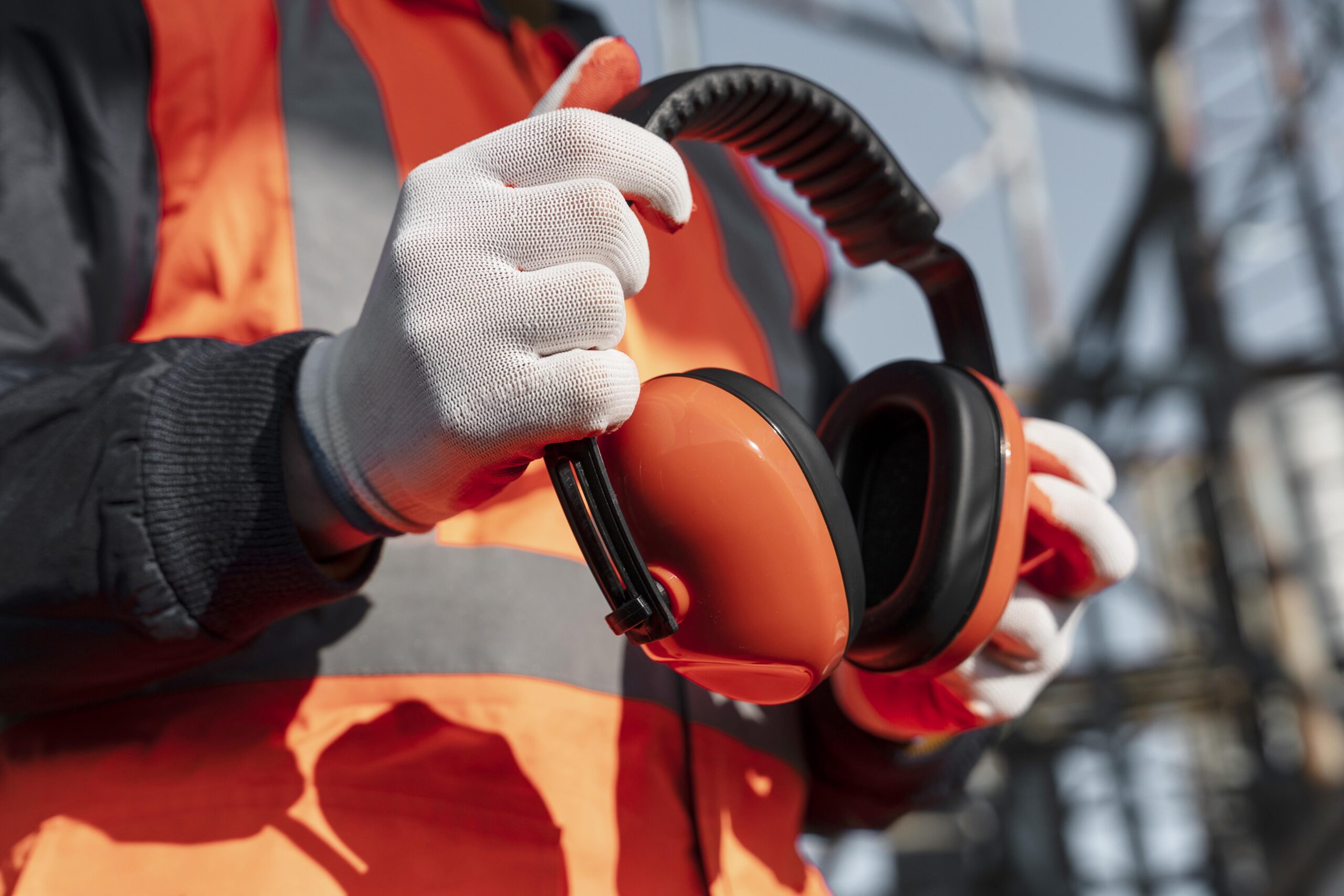
- Earmuffs: easy to put on and check from a distance, good for short or intermittent exposure. Safety glasses arms and hair can break the seal.
- Helmet-mounted earmuffs: clip onto hard hats so workers always have them to hand.
In very loud areas, earplugs and earmuffs together give extra protection.
Make sure it works
- Teach workers how to fit earplugs correctly — most poor protection comes from poor fit.
- Wear protection for the whole time in the noisy area; taking it off for even a few minutes reduces protection a lot.
- Replace earmuff cushions when they harden or crack, and disposable plugs after use.
- Mark noisy areas with signs so people know protection is required.
Quick answers
At what noise level is hearing protection needed?
Many safety programmes act at about 85 decibels averaged over a shift. A quick rule: if you must raise your voice to talk to someone an arm’s length away, protect your ears.
Are earplugs or earmuffs better?
Both work when worn correctly. Earplugs suit hot conditions and long wear; earmuffs are quick to fit and easy to check. In very loud areas, use both together.
Why do earplugs sometimes fail to protect?
Usually because they are not inserted properly. Foam earplugs must be rolled, inserted deep into the ear and allowed to expand.
Rawleh supplies earplugs, earmuffs and helmet-mounted hearing protection for mining and industrial sites.
More safety tips
- Monthly First Aid Box Checklist for Mines and Workplaces in Zambia
- How to Choose Work Gloves for Mining, Welding and Industrial Work
- Monthly Fire Extinguisher Inspection Checklist for Workplaces in Zambia
- How to Choose Safety Boots for Mining and Construction — and When to Replace Them
- Fibreglass vs. Rescue Stretchers: Choosing the Right Equipment for Your Site
Leave a Reply