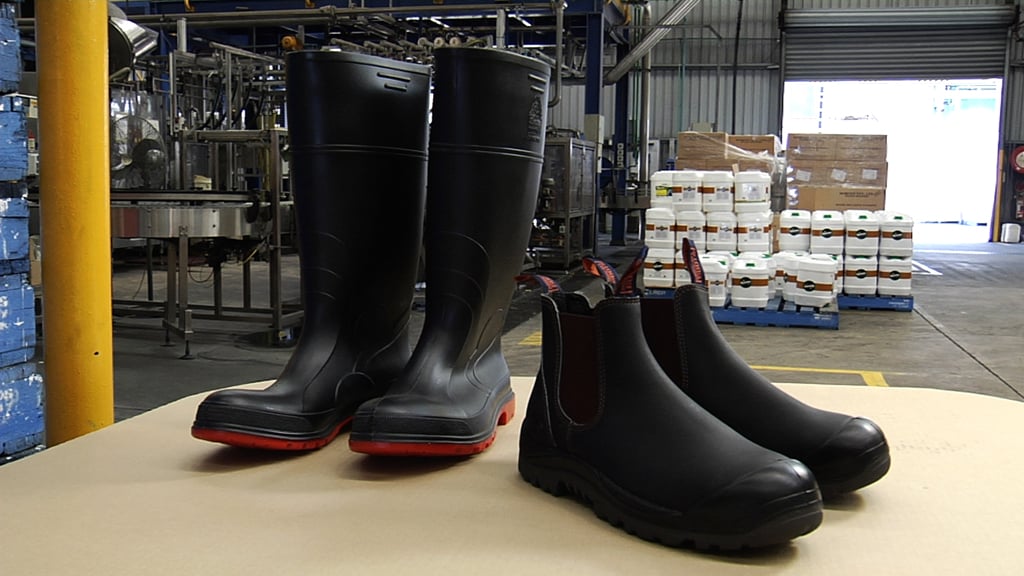
Feet face crushing loads, sharp objects, wet floors, chemicals and long hours of standing. A good pair of safety boots protects against all of these — but only if it suits the job and is still in good condition. Rawleh Enterprises supplies safety boots, safety shoes and gumboots to mining and construction sites across Zambia.
What to look for
- Toe protection: a steel or composite toecap protects against falling and rolling objects. Composite toecaps are lighter and do not conduct heat or cold.
- Puncture-resistant midsole: important where nails, scrap metal or sharp rock are underfoot.
- Slip-resistant sole: for wet, oily or muddy surfaces.
- Water resistance: for wet sites; gumboots with toecaps for very wet or muddy conditions.
- Ankle support: higher boots for uneven ground and underground work.
- Electrical hazard or antistatic soles: where the work requires them.
Get the right fit
Try boots on with the socks you will wear at work, ideally later in the day when feet are slightly larger. There should be room to move the toes, with the heel held firmly. Uncomfortable boots get taken off — and then they protect no one.
When to replace safety boots
- The toecap is exposed, dented or cracked — especially after a heavy impact
- The sole is worn smooth, split or coming away from the upper
- Holes in the upper or the lining
- The boot no longer keeps water out where water resistance is needed
- The boots no longer give support and cause discomfort
Look after them
Clean off mud and chemicals, let boots dry naturally away from direct heat, and check them regularly. Well-kept boots last longer and protect better.
Quick answers
Steel or composite toecaps — which is better?
Both protect against impact. Composite toecaps are lighter and do not conduct heat or cold; steel toecaps are durable and widely available.
When should safety boots be replaced?
When the toecap is exposed or damaged, the sole is worn smooth or splitting, or the boots no longer give support or keep water out.
Should safety boots be replaced after a heavy impact?
Yes. A toecap that has taken a heavy impact may no longer protect fully, even if it looks undamaged.
Rawleh supplies safety boots, safety shoes, gumboots and mining footwear with steel or composite toecaps.
More safety tips
- Monthly First Aid Box Checklist for Mines and Workplaces in Zambia
- How to Choose Work Gloves for Mining, Welding and Industrial Work
- Monthly Fire Extinguisher Inspection Checklist for Workplaces in Zambia
- Earplugs or Earmuffs? Hearing Protection for Noisy Mine and Industrial Sites
- Fibreglass vs. Rescue Stretchers: Choosing the Right Equipment for Your Site
Leave a Reply